Rising Rates of Early-Onset Dementia and Alzheimer’s in Younger Americans
Premier Integrative & Cognitive Medical Institute

Dementia and Alzheimer’s disease are often thought of as conditions of older age. But recent data from the Blue Cross Blue Shield Association (BCBSA) shows a striking shift: diagnoses of early-onset dementia and Alzheimer’s are increasing rapidly among adults well below traditional retirement age.
Surging Diagnoses Among Younger Adults
According to the BCBSA’s Health of America Report® titled “Early-Onset Dementia and Alzheimer’s Rates Grow for Younger Americans,” the number of commercially insured adults ages 30 to 64 diagnosed with early-onset dementia or Alzheimer’s spiked sharply between 2013 and 2017. In 2017, approximately 131,000 Americans in this age range had received a diagnosis — a more than two-fold increase over just four years.
The report highlights dramatic increases across age groups:
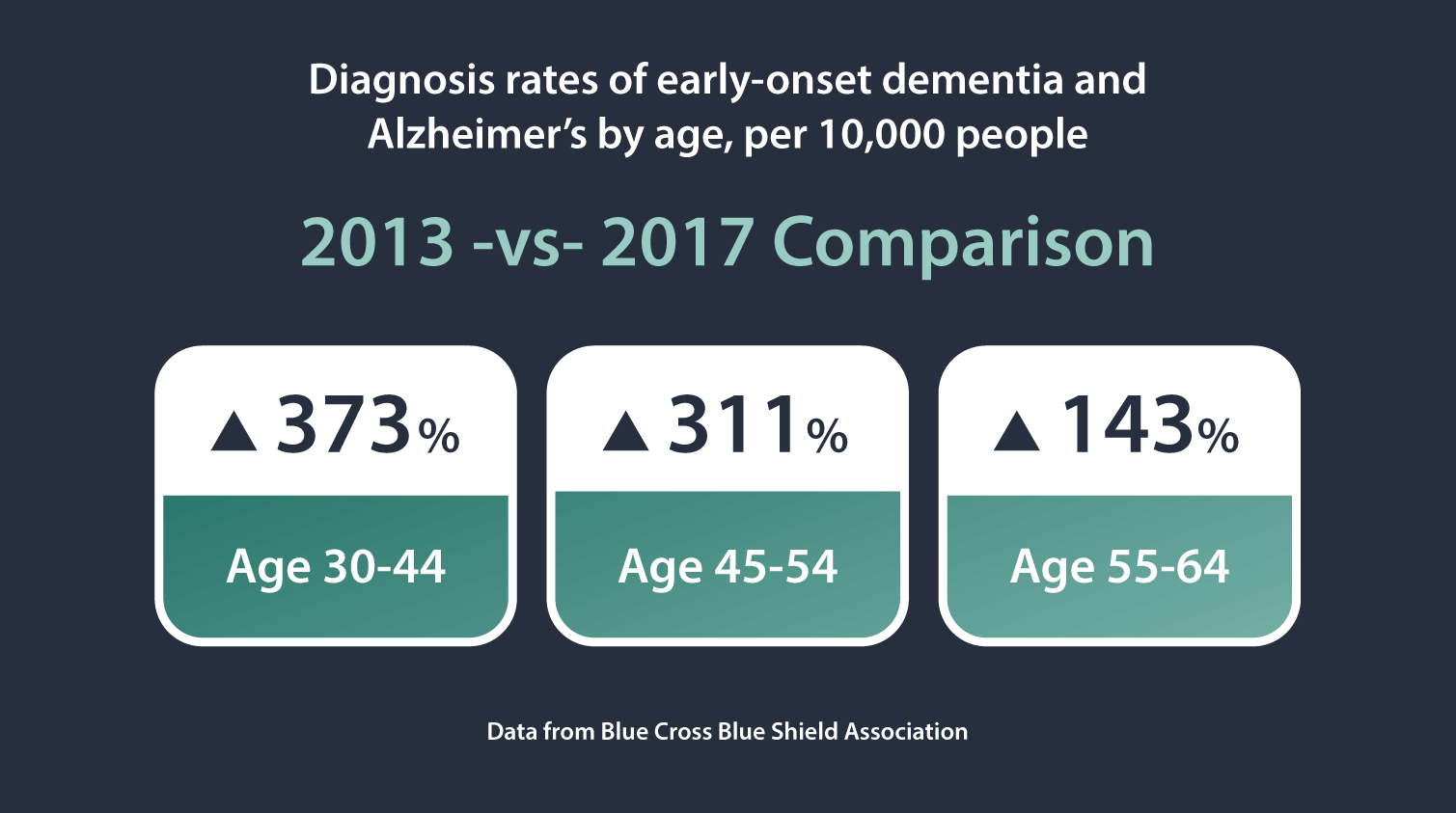
These changes represent a trend not just in raw numbers but in age patterns, with the average age of a person living with early-onset dementia or Alzheimer’s now around 49 years old.
Why This Matters Clinically and Socially
Early-onset dementia and Alzheimer’s present unique challenges:
- Disruption during prime working years: Individuals may still be employed, raising children, or managing complex responsibilities.
- Caregiver burden: Family members — particularly women, who account for a majority of both diagnoses and caregiving — often shoulder extensive unpaid care, which can lead to financial strain and emotional stress.
- Economic impact: Nearly 16 million Americans provided more than 18 billion hours of unpaid care for people with Alzheimer’s and other dementias in recent years, underscoring the societal cost of these conditions.
The report reflects data from BCBS Axis, a database of medical claims for more than 48 million commercially insured individuals, making its findings a broad snapshot of real-world diagnostic trends.
What Could Be Driving the Trend?
The BCBSA and affiliated experts emphasize that increases in diagnosis do not necessarily mean that the underlying biological rate of dementia alone is rising. Several factors may be contributing:
- Improved recognition and diagnostic practices: Advances in clinical tools and awareness could lead to earlier and more frequent diagnoses.
- Heightened clinician awareness and coding practices: More clinicians may be screening for and reporting cognitive changes earlier.
- Population health shifts: Risk factors like cardiovascular disease, diabetes, and metabolic conditions — which can influence brain function — are prevalent in midlife and may affect cognitive health over time.
- Biological timeline of disease: Alzheimer’s pathology often begins decades before symptoms emerge, meaning cognitive changes can be evident earlier than previously recognized.
These patterns align with broader research showing that brain changes associated with Alzheimer’s begin long before clinical symptoms emerge, underscoring the importance of early detection and prevention strategies.
Why It’s Important for Care and Planning
For clinicians, patients, and families, early-onset dementia has implications for care structure:
- Earlier intervention and monitoring: Recognizing cognitive changes earlier allows medical teams to assess contributing factors such as sleep, stress, cardiovascular risk, and genetics.
- Comprehensive care strategies: Addressing cognition alongside co-occurring health issues can support better outcomes over time.
- Support systems for caregivers: Expanding caregiver support and education is crucial, given the emotional, social, and financial toll of long-term care.
Because these symptoms can emerge during midlife—when individuals are otherwise functioning at a high level—early recognition is essential. Identifying cognitive changes sooner allows for more accurate evaluation, monitoring, and proactive brain-health planning before symptoms significantly interfere with daily life.
Looking Ahead
The BCBSA report raises urgent questions for research, clinical practice, and public health: How much of the rise reflects true changes in disease prevalence versus better detection? What modifiable risk factors could be targeted to prevent or slow cognitive decline in midlife? How can healthcare systems adapt to support younger individuals and their families facing these diagnoses?
Addressing these questions will require coordinated efforts across research, clinical care, and policy — all anchored by the understanding that dementia and Alzheimer’s disease are not solely conditions of old age, but neurological disorders that can emerge decades earlier.
Further Reading
For more detail on early-onset trends and demographic breakdowns, see the Blue Cross Blue Shield Association report “Early-Onset Dementia and Alzheimer’s Rates Grow for Younger Americans”