Could Psilocybin Help Alzheimer's Patients? A Remarkable New Case Report
Premier Integrative & Cognitive Medical Institute
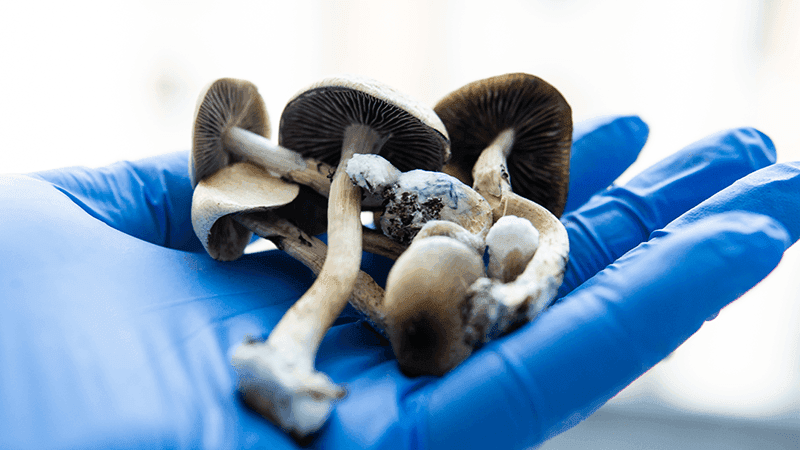
For decades, Alzheimer's disease and psychedelic research have occupied very different corners of medicine. Alzheimer's research has largely focused on slowing cognitive decline, reducing amyloid plaques, and preserving brain function for as long as possible. Psilocybin, the psychoactive compound found in certain mushrooms, has more recently attracted attention for its potential to treat depression, anxiety, addiction, and other mental health and brain health conditions through its effects on brain connectivity and neuroplasticity.
Now, these two fields are beginning to intersect in intriguing ways.
A recently published case report describes an elderly woman with advanced Alzheimer's disease who experienced unexpected and meaningful improvements following psilocybin administration. The highly positive outcomes have sparked curiosity—and perhaps a measure of hope.
The patient had lived with Alzheimer's disease for approximately a decade. By the time of the intervention, she faced severe cognitive and functional impairment. Communication was minimal, daily activities required extensive support, and meaningful emotional connection with loved ones had become increasingly rare.
Following a high-dose psilocybin experience, however, something unusual happened.
After a prolonged recovery period, the patient began speaking in ways she had not for years. She recalled autobiographical memories and engaged in extended conversations with family members. In the days and weeks that followed, caregivers reported improvements across several areas of daily functioning.
Among the reported changes were:
- Greater verbal communication and social engagement
- Improved mobility and walking ability
- Return of urinary continence after years of incontinence
- Increased emotional expression and responsiveness
- Greater independence with daily tasks
- Improved awareness of family members and surroundings
For those who care for people with Alzheimer's disease, these changes represent much more than clinical observations. They touch on some of the most challenging aspects of the disease: communication, dignity, independence, and connection.
Perhaps most striking was the return of personal memories and meaningful interaction. Alzheimer's often feels like a gradual loss of access—not only to memories, but to the person behind them. Reports that the patient was able to share stories, express humor, and reconnect socially are among the most emotionally significant aspects of the case.
Researchers have several intriguing theories about how psilocybin may have contributed to these changes. One possibility is that psilocybin temporarily alters communication between large-scale brain networks, allowing dormant or inaccessible functions to re-emerge. Another hypothesis involves neuroplasticity—the brain's capacity to reorganize and form new connections. These ideas align with a growing body of psychedelic research suggesting that psilocybin can produce profound changes in how the brain processes information.
While the science is still unfolding, this case reminds us that the story of the brain is far from fully written. Sometimes the most important discoveries begin with a single unexpected outcome.
Source: Lago M, Cerveira M and Simonet JX (2026) Transient multidomain functional improvement in advanced Alzheimer's disease following high-dose psilocybin-containing mushroom administration: a case report. Front. Neurosci. 20:1813281. doi: 10.3389/fnins.2026.1813281