Whole Mushroom vs Pill: Is There a Difference?
Premier Integrative & Cognitive Medical Institute
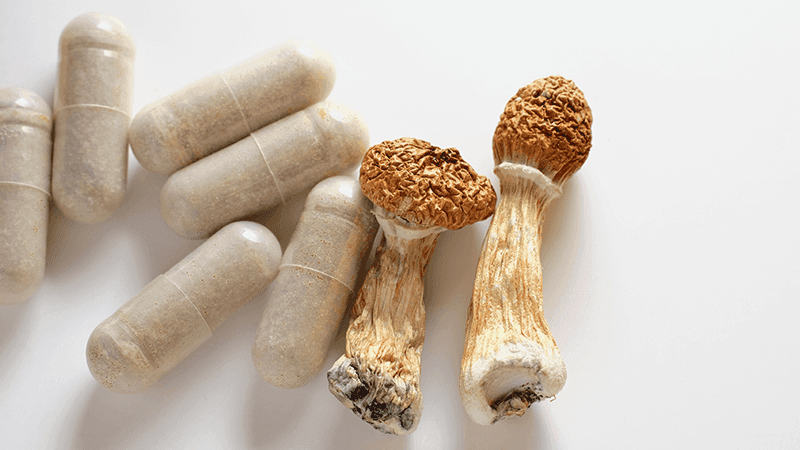
A new computational study is shedding light on why psilocybin-producing mushrooms may offer more than just the effects of isolated psilocin. Rather than focusing on a single molecule, the research examined how multiple naturally occurring compounds in these mushrooms interact with a network of targets in the brain. The results suggest that these compounds may act together on serotonin, dopamine, and other signaling systems, producing a synergistic “entourage effect.” According to the study, this combined activity could influence neuroplasticity, mood regulation, and cognitive flexibility in ways that differ from a single isolated compound.
How the Study Investigated Mushroom Compounds
To explore how these compounds might work together, the researchers used three complementary computational approaches:
Network Pharmacology
Network pharmacology examines how multiple compounds interact with networks of biological targets. Instead of studying one drug acting on one receptor, this approach maps relationships between compounds, proteins, and signaling pathways across a biological system. In this study, the method helped identify which brain receptors and pathways might be influenced by compounds found in psilocybin-producing mushrooms, highlighting targets involved in serotonin signaling, dopamine regulation, and neuroplasticity.
Molecular Docking
Molecular docking predicts how well a compound fits into the binding site of a target protein—similar to testing whether a key fits into a lock. Researchers used docking models to estimate how strongly mushroom compounds might bind to receptors such as serotonin receptors and enzymes involved in neurotransmitter metabolism. Strong predicted binding suggests the compound may meaningfully interact with that target.
Molecular Dynamics Simulations
While docking provides a static snapshot, molecular dynamics simulations model how a compound and protein behave together over time. These simulations test whether interactions remain stable under conditions that mimic the dynamic environment inside cells. In this study, molecular dynamics simulations supported the stability of several predicted compound–target interactions.
Together, these approaches allowed the researchers to build a systems-level model of how multiple mushroom compounds might act across interconnected neural pathways.
| HTR2A | Cortical plasticity, DMN modulation |
| MAOA | Monoamine metabolism inhibition |
| SLC6A4 | Serotonin reuptake modulation |
| DRD2 | Reward & motivation |
| TRP Channels | Analgesic & anti-inflammatory |
While these findings provide exciting mechanistic insights, it’s important to note that the study is still being finalized and is pending full publication.
Read the study: Murray, Z., Lewies, A., Wentzel, J.F. et al. Network pharmacology and molecular simulation reveal the entourage effect mechanisms of psilocybin-producing mushrooms on the brain. Sci Rep (2026). https://doi.org/10.1038/s41598-026-39483-7